E-Commerce Solutions & Development in Switzerland

Build an online store around how your business actually sells

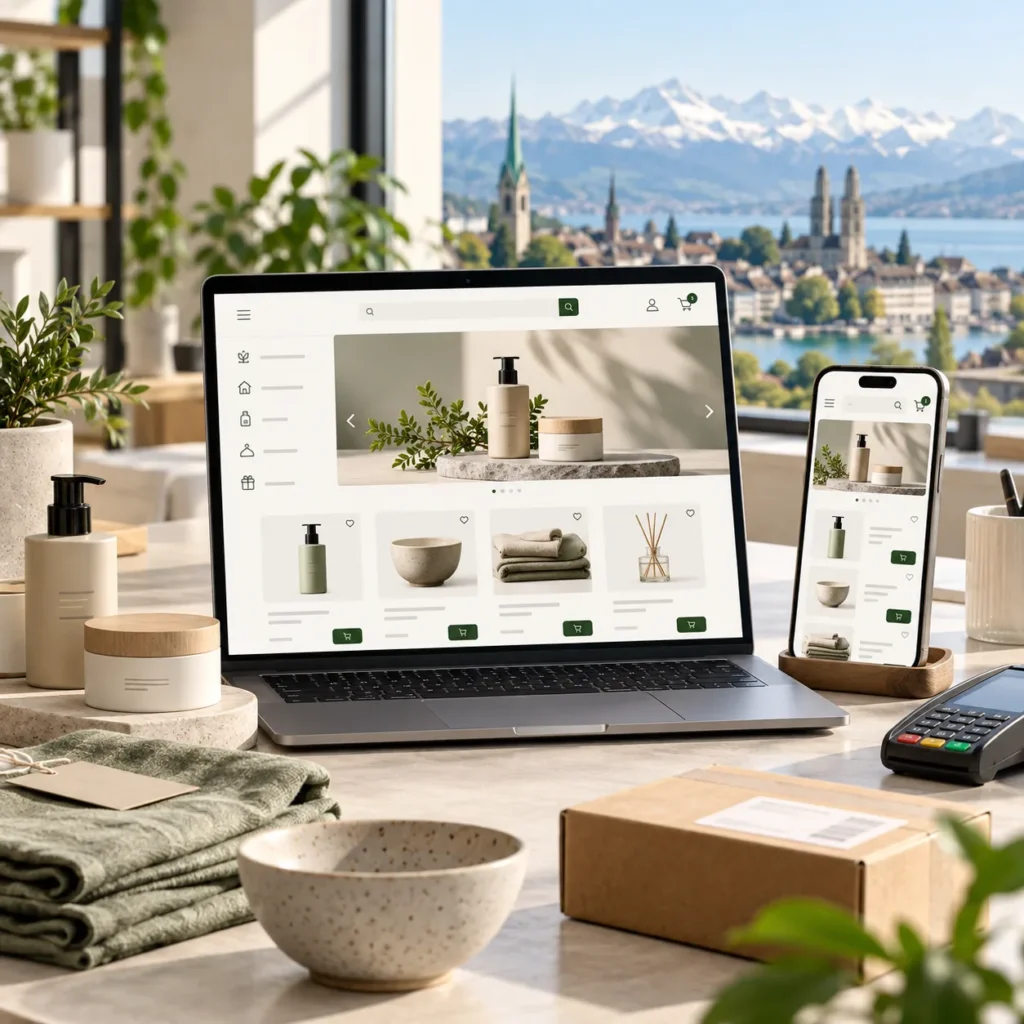
SwissLayer provides e-commerce development and e-commerce services for businesses in Zurich, Geneva, Lausanne and across Switzerland.

We develop new online stores, improve existing e-commerce websites and build the structure needed to manage products, customer journeys, checkout and the systems behind the store.

E-Commerce Solutions and Development in Switzerland

An Online Store Has More to Manage Than Products

An e-commerce website has to work for two sides of the business at the same time.

Before development begins, we look at what the website needs to achieve, who will use it and how it needs to work.

Your team needs to manage products, categories, content, orders and the processes that happen after a purchase.

As a store grows, problems can appear in places that were not obvious when the website was first launched. Product information may become inconsistent. Navigation can become harder to manage. New functionality may not fit the existing structure. Separate business systems may also need to exchange information.

E-commerce development should account for these requirements from the beginning rather than treating the store as a standard website with a product catalogue added to it.

Start With the Customer's Shopping Journey

A customer should be able to move through the store logically, from discovering a product to completing an order.

That can involve:

01

Product categories and collections

02

Search and filtering

03

Product information

04

Product selection

05

Cart management

06

Checkout

07

Customer accounts

08

Order related interactions

Each part of the journey affects the next.

A retailer with hundreds of products may need clear categories, filters and product variations so customers can narrow down their choices. A smaller store may need a simpler structure focused on a smaller number of products.

A product page also needs to lead naturally into the cart, while checkout needs to handle the information and actions required to complete the purchase.

The exact structure depends on what you sell, how customers buy and what the business needs the store to handle.

E-Commerce Development Services

Product & Catalogue Structure

Products need to be organised in a way that makes sense to both customers and the people managing the store.

Depending on the business, this can include products, categories, collections, variations and supporting product information.

A well planned catalogue can make it easier for your team to add products, maintain categories and keep information consistent as the product range changes.

Shopping Cart & Checkout

The cart and checkout are central parts of an online store.

The development approach should account for the information customers need to provide, the actions they need to complete and any business requirements connected to the order.

For example, the checkout requirements for a direct to consumer store may differ from a business that needs account-based purchasing or other specific ordering workflows.

Customer Accounts

Where required, an e-commerce website can provide customers with account functionality for managing relevant information, orders and other interactions.

The exact account features should reflect the way customers use the store rather than adding account functionality that the business does not need.

Payment Functionality

Online stores need a suitable way to process purchases as part of the checkout journey.

Payment requirements should be considered alongside the selected platform, business model and technical setup. Specific payment providers should be selected according to the project rather than assumed in advance.

Responsive E-Commerce

Customers may browse and purchase from desktop computers, tablets or mobile devices.

The store therefore needs to account for different screen sizes and touch based interactions across product browsing, search, product information, cart and checkout.

Custom E-Commerce Functionality

Some businesses have requirements that do not fit neatly into standard platform functionality.

Where appropriate, custom development can be considered for business specific workflows, catalogue requirements, customer journeys or integrations.

Choosing the Right E-Commerce Platform

The decision should consider:

The platform affects how the store is managed, how much it can be customised and how it connects with the wider business.

There is no single platform that is right for every ecommerce retailer.

Product catalogue and variations

Business model

Number of products

Content requirements

B2B or B2C requirements

Required integrations

Internal workflows

Team capabilities

Future requirements

Level of customisation needed

Each part of the journey affects the next.

A retailer with hundreds of products may need clear categories, filters and product variations so customers can narrow down their choices. A smaller store may need a simpler structure focused on a smaller number of products.

A product page also needs to lead naturally into the cart, while checkout needs to handle the information and actions required to complete the purchase.

The exact structure depends on what you sell, how customers buy and what the business needs the store to handle.

Shopify & WordPress E-Commerce

SwissLayer can work with the platforms included within its confirmed service offering, with the appropriate choice depending on the requirements of the store.

Shopify E-Commerce

Shopify can be suitable for businesses looking for a managed e-commerce platform with practical tools for running an online store.

The implementation can be planned around the product catalogue, customer journey, content requirements and functionality the business needs.

The important question is whether the Shopify setup fits the products, customers and processes involved.

WordPress E-Commerce

WordPress can be considered when a business needs e-commerce functionality alongside a broader WordPress website and content structure.

The development approach can take into account the product catalogue, website content, page structure and functionality required by the store.

For example, a business that already manages its company website through WordPress may need its e-commerce functionality to work within that existing content structure.

The platform decision should still follow the project requirements rather than assuming that one platform suits every business.

Connecting the Store to the Business Behind It

An online store may need to exchange information with systems that already exist inside the business.

Depending on the project, this can include:

ERP systems

Business model

Inventory systems

Accounting software

Shipping systems

Marketing tools

Customer databases

Business software

APIs

For example, if your team currently has to enter the same order or customer information into multiple systems, the integration requirements should be considered before development.

The existing systems, available APIs and required data flows should be reviewed before deciding how an integration should work.

This connects naturally with our broader [Integrations & Digital Infrastructure] services.

What Happens After the Customer Clicks Buy?

The customer completing an order is only one part of the e-commerce process.

Behind the store, the business may need to manage:

Order information

Inventory updates

Customer records

Fulfillment workflows

Shipping information

Returns

Internal notifications

Business reporting

The website does not necessarily need to perform every one of these tasks itself.

Instead, the e-commerce setup may need to pass the right information to the systems and people responsible for them.

For example, an order placed through the store may need to reach an internal system responsible for inventory, fulfilment or customer records. The exact workflow depends on how the business already operates.

Understanding this workflow early can help prevent the store from becoming disconnected from the way the business actually operates.

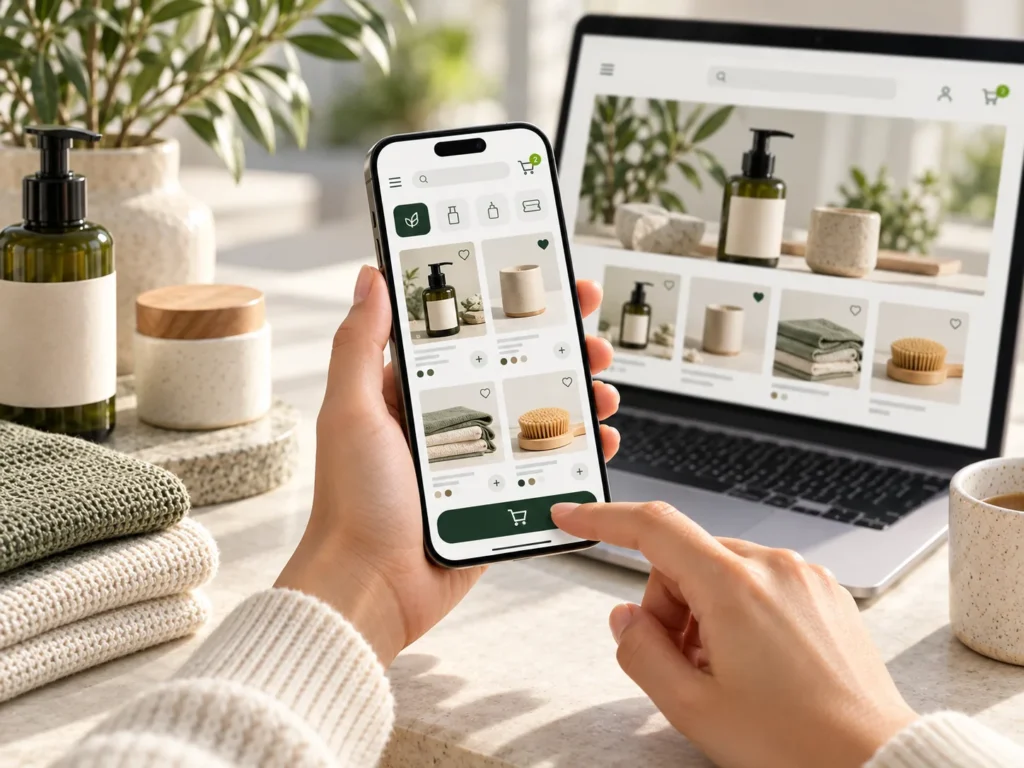
Customer shopping through a mobile e-commerce store with a responsive desktop website

E-Commerce Designed for Mobile Shopping

A mobile store is not simply a desktop website reduced to a smaller screen.

Customers need to be able to browse products, navigate categories, search, review product information, manage their cart and complete checkout comfortably from a mobile device.

That means mobile requirements need to be considered across the shopping journey rather than addressed only at the end of development.

For a store with a large catalogue, this may mean paying particular attention to mobile navigation and product filtering. For a smaller store, the focus may be on keeping product information and checkout straightforward.

The exact mobile experience will depend on the products, catalogue structure and functionality of the store.

Connecting the Store to the Business Behind It

An online store may need to exchange information with systems that already exist inside the business.

Depending on the project, this can include:

Products becoming difficult to organise

Inconsistent catalogue structures

A platform that restricts required functionality

Checkout changes becoming difficult

Missing integrations

New features that do not fit the existing setup

Business processes that remain unnecessarily manual

A need to move to a different platform

For example, you may be unable to introduce a required product structure, change part of the checkout flow or connect an internal system without relying on workarounds.

The answer is not always a complete rebuild.

The existing store, platform, catalogue, integrations and business requirements should be reviewed first.

From there, the appropriate approach may be to improve the current setup, add specific functionality, restructure parts of the store or consider a different platform.

When Custom E-Commerce Development Makes Sense

Examples can include:

tandard e-commerce platforms can cover many common requirements.

Custom development becomes more relevant when the business has requirements that cannot be handled effectively through the standard setup.

Custom product logic

Business-specific workflows

Special pricing structures

Unique customer journeys

Complex integrations

Custom catalogue requirements

Specific internal processes

For example, a business may need product rules or ordering steps that do not fit comfortably into the standard platform configuration.

Custom development should solve a real business requirement.

If the existing platform can handle the requirement effectively, additional complexity may not be necessary. Where the business has a genuine requirement outside the standard setup, custom development can be considered as part of the wider solution.

Which E-Commerce Setup Fits Your Business?

Starting a New Online Store

For businesses launching their first online store and needing the catalogue, customer journey, platform and functionality considered before development begins.

Growing an Existing Store

For businesses whose product catalogue, content or operational requirements have become more complex as the store has expanded.

Improving an Existing E-Commerce Website

For businesses that already sell online but need improvements, additional functionality or a better technical structure without automatically replacing the entire store.

Connecting Multiple Business Systems

For businesses where the online store needs to exchange information with CRM, ERP, inventory, accounting or other business systems.

Supporting Specific Commerce Requirements

For retailers whose products, catalogue structure, customer journey or internal processes require something beyond a standard store setup.

Our E-Commerce Approach

E-commerce development process from store planning and design to development, checkout testing and responsive launch

01

Understand the Business Model

We first look at what the business sells, who buys it, how products are managed and what needs to happen after an order.

02

Map the Store Structure

The catalogue, navigation, customer journey, content structure and required functionality are considered before development begins.

03

Build & Connect

The store is developed around the agreed requirements, with the required business systems and integrations considered as part of the implementation.

04

Test the Buying Journey

The key shopping journey is reviewed across product discovery, product information, cart, checkout, forms, integrations and relevant mobile behaviour.

How We Approach E-Commerce Projects

Commerce Requirements Come Before Development

The store is planned around what the business sells, how customers purchase and what the business needs to manage behind the scenes.

Customer Journey and Business Operations Are Considered Together

The customer-facing store and the processes behind an order need to work together. Both are considered when defining the development requirements.

The Platform Follows the Requirements

Shopify, WordPress or another suitable approach should be considered based on the catalogue, functionality, integrations and future needs of the business.

Custom Development Has a Purpose

Where standard functionality is sufficient, there is no need to introduce unnecessary complexity. Custom development can be considered when a genuine business requirement calls for it.

E-Commerce Projects

A look at how different business needs can take shape on the web.

Frequently Asked Questions

Which e-commerce platform should our business use?

There is no single platform that suits every business. The right choice depends on the products, catalogue, business model, content requirements, integrations, internal workflows and future plans.

Yes, e-commerce development can cover a new online store based on the business requirements, product structure, customer journey and functionality required for the project.

An existing store can be reviewed before deciding whether it needs specific improvements, additional functionality, restructuring or a different platform.

Shopify is part of the agency’s confirmed service offering. The store can be planned around the catalogue, customer journey, content and functionality required by the business.

WordPress is part of the agency’s broader service offering and can be considered for e-commerce projects where a WordPress based website and content structure are appropriate.

The store can be structured around the way your team needs to manage products, content and other recurring information. The exact editing experience depends on the selected platform and project requirements.

Potentially, depending on the existing systems, available APIs and required data flows. These requirements should be reviewed before deciding how the integration should be implemented.

Custom functionality can be considered when a standard platform setup does not adequately support a specific business requirement, workflow, catalogue structure or integration.

Can you support B2B e-commerce?

If B2B e-commerce is part of your requirements, we can review the account, pricing, ordering and workflow requirements and determine the appropriate approach. B2B commerce can involve requirements that differ from standard consumer shopping.

Yes. Platform selection can be considered around the business model, product catalogue, customer journey, integrations, internal workflows and future requirements.

Where the existing platform and technical setup are suitable for the required work, improvements can be made without automatically replacing the entire store. The current setup should be reviewed first.

Yes, where existing designs are available, they can provide a starting point for developing the store. The layouts, product pages, shopping journey and required functionality can be reviewed before implementation.

Mobile behaviour can be considered across product browsing, navigation, search, product information, cart and checkout so the shopping journey works across relevant devices.

If migration is required, the current platform, catalogue, content, functionality and integrations would need to be reviewed first. The appropriate migration approach depends on the existing store and the destination platform.

Useful starting information includes your current website or store, product catalogue, business model, existing platform, required functionality, current business systems and integration requirements.

Planning a New E-Commerce Store?

Whether you are launching an online store or improving an existing one, share the details of what you need the store to sell, manage and connect.

You can send your current store, product catalogue, business model, preferred platform, required functionality, existing systems or integration requirements.

We can review the project requirements and establish the appropriate direction for the e-commerce build.

E-commerce development process from store planning and design to development, checkout testing and responsive launch